The Local AI Revolution: A Balanced Look at Edge Computing vs. The Data Center
From Your Desk to the Data Center – Why Both May Define Our AI Future
Picture this: a computer smaller than your wallet, humming quietly on your desk, running advanced AI models that cost just a few dollars in electricity per month. No cloud subscriptions. No data leaving your home. For around $250. Sounds revolutionary, right? It is. But does it mean the end of massive data centers? Not exactly. Let me walk you through what’s actually happening — without the hype or doomsday predictions.
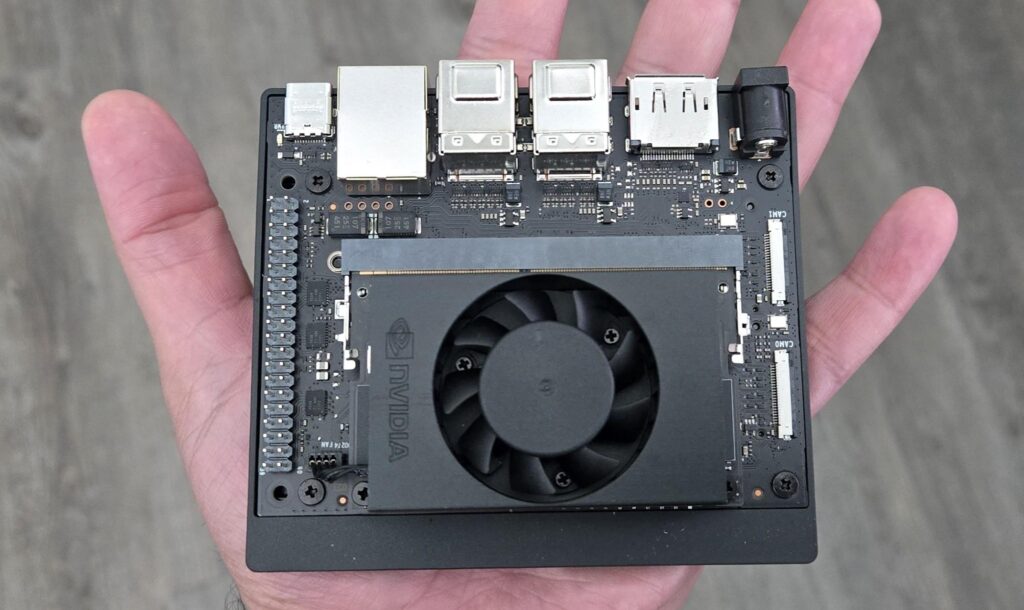
What’s Real: The Jetson Orin Nano Super
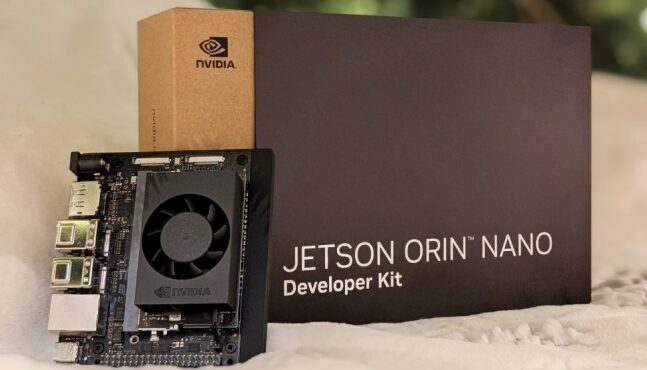
NVIDIA’s Jetson Orin Nano Super Developer Kit is real, and its specifications are genuinely impressive. Priced at $249, this compact device delivers up to 67 trillion operations per second (TOPS) while drawing only 7-25 watts of power. It runs popular AI models like Llama, Mistral, and Gemma entirely locally, with no data ever leaving your device. Benchmarks show it handles Llama 3.1 8B at about 19 tokens per second — a 37% improvement over its predecessor. For smaller models like Llama 3.2 3B, performance jumps 55% to over 43 tokens per second.
The economics are compelling:
– Cloud approach (OpenAI API) ~$200/month for a developer using AI extensively for coding and automation
– Edge approach (Jetson) ~$250 one-time hardware + ~$2-5/month electricity
The break-even point? Between 2 to 6 months, depending on your usage patterns. After that, you’re essentially running AI for the cost of powering a small light bulb.
So Why Are Billions Still Pouring Into Data Centers?
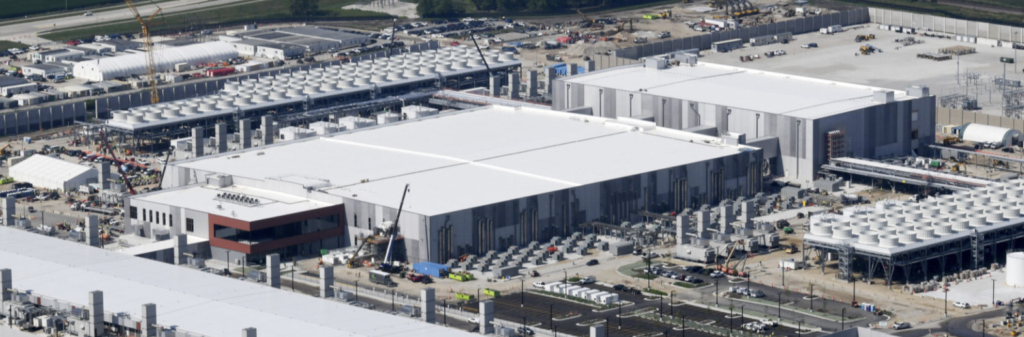
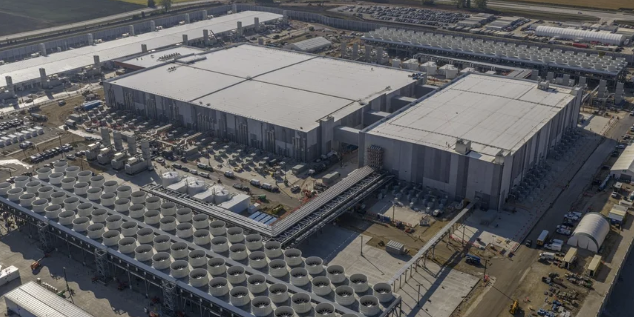
If edge devices are this capable, why are the world’s largest tech companies — Microsoft, Amazon, Meta, Alphabet, Oracle — projected to spend over $700 billion collectively on data center infrastructure in 2026 alone?
Microsoft alone expects to spend around $190 billion. Meta raised its forecast to $125-145 billion. Amazon remains near $200 billion.
The answer reveals three important nuances.
1. Different Tools for Different Jobs
The Jetson runs one large language model locally. Cloud providers orchestrate entire fleet of agents communicating in real-time — researching the web, accessing up-to-date information, coordinating complex multi-step tasks, and tapping into the world’s continuously expanding knowledge corpus.
Your local AI will know current events only up to its last update. The cloud knows what happened five minutes ago. For many personal applications, that gap doesn’t matter. For research, journalism, finance, or real-time analytics, it matters enormously. Edge AI also excels at some tasks where cloud lags. On-device inference can achieve sub-100ms latency, while cloud round-trips typically take 500-1000ms — a 5-10x difference. For real-time applications like robotics, autonomous vehicles, or instant translation, edge wins decisively.
2. The Scale Challenge
67 TOPS is impressive for a $250 device. But training a single frontier AI model can require millions or billions of TOPS across thousands of GPUs running for weeks. The Jetson is an inference device — running models someone else trained. The data centers powering companies like OpenAI and Anthropic are simultaneously training next-generation models and serving millions of users.
3. Strategic and Geopolitical Factors
The conversation raises legitimate questions about motivations beyond pure economics. Data center locations in water-stressed regions like the Texas Panhandle, where the Ogallala Aquifer supplies critical groundwater for agriculture, have sparked genuine concern. Texas has unique ”absolute dominion” water laws that, as noted in the interview, impose few restrictions on groundwater pumping. Reports suggest a single large AI facility can draw millions of gallons daily.
China’s generative AI user base reached over 600 million people by late 2025— a 141.7% increase from the previous year.
The claim that more people in China use AI than use the internet in the United States is directionally accurate: China’s AI penetration hit 42.8% of internet users, or roughly 602 million people. This rapid adoption has occurred partly because export controls forced Chinese developers to optimize for efficiency, accelerating edge-AI innovation. Whether this constitutes an ”AI cyber war” is debatable. But the geopolitical reality is that both the US and China view AI infrastructure as strategic, and neither wants to cede leadership.
What About Surveillance Claims?
The interview raises the possibility that massive compute buildouts could enable unprecedented surveillance capabilities. While technically plausible — more compute power enables more real-time monitoring, facial recognition at scale, and predictive analytics — this remains speculative. The same edge devices that enable privacy (running AI locally, on your own hardware) could theoretically be repurposed.
But that’s a question of governance and regulation, not technology. For consumers today, local AI genuinely offers privacy advantages. Running models locally means your prompts, documents, and conversations never transit a cloud server. Devices that minimize tracking — avoiding Wi-Fi positioning systems, using satellite GPS only — are technically feasible and commercially available.
Where Are We Headed? Three Likely Outcomes
The most probable future isn’t edge or cloud it’s both, intelligently combined.
Scenario A : The Hybrid Normal
Most users will run routine AI tasks locally (spelling correction, document summarization, personal assistants) while relying on cloud AI for complex research, real-time information, training large models, and collaboration. We’ll see seamless handoffs between edge and cloud, invisible to the user.
Scenario B : Specialized Fragmentation
Enterprises and power users will maintain local infrastructure for privacy, latency, or regulatory reasons. Meanwhile, general consumers will remain largely cloud-dependent due to convenience, despite edge capabilities existing in their devices.
Scenario C : The Rebalancing
If edge performance continues accelerating — and NVIDIA’s DGX Spark and DGX Station announcements suggest it will, bringing petaflop-class AI to deskside systems — we may see a genuine shift. But even then, cloud won’t disappear; it will evolve to handle tasks edge cannot: global coordination, real-time updates, massive model training, and serving billions of users simultaneously.
A Final Thought
Edge computing is genuinely revolutionary. The Jetson Orin Nano Super proves that powerful AI can run affordably, privately, and locally. Data centers aren’t obsolete but their role is shifting. The trillion-dollar question isn’t whether we need data centers. It’s what mix of edge and cloud serves humanity best: efficient, private, sustainable, and secure. That conversation is just beginning. And for the first time, the hardware in your pocket or on your desk gives you a real choice.