My First Hackathon: A Solo Adventure into AI Workflows
It all started with a LinkedIn scroll. You know the kind—where you’re supposed to be working but instead you’re seeing what everyone else is up to. And there it was: an announcement for the AI-Assisted Workflow Coding Hackathon at Chas Academy, organized by Cillers. The jury list alone read like a who’s who of Nordic tech royalty, with heavyweights from Ericsson, SEB, Volvo, and more. I thought, ”This looks fun. And slightly terrifying. Perfect.”
Why Solo?
Naturally, my first instinct was to rally the troops. I asked around my classmates: ”Anyone want to join a hackathon with me?” The responses ranged from polite declines to nervous laughter. Nobody was interested. And honestly? I get it. The idea of spending a weekend wrestling with unfamiliar technologies while being judged by CTOs and engineering managers isn’t everyone’s idea of a good time. But something in me decided that if nobody else was going, I’d just go alone. Worst case scenario, I’d learn something new and eat some free food. Best case? I might actually build something cool. So I hit that registration button before I could talk myself out of it.
My preparation…
Once I committed, the slight panic set in. The hackathon required a very specific tech stack that I’d have to use: Temporal, Polytope, Couchbase, and Bluetext. If you’re sitting there thinking ”what on earth are those?”—don’t worry, I had the exact same reaction.
Let me break these down in human terms:
Temporal is like having an incredibly reliable project manager for your code. Imagine you’re coordinating a complex process with multiple steps—like onboarding a new supplier, which involves checking their credentials, running background checks, waiting for approvals, and so on. Temporal makes sure each step happens in the right order, and if something fails (like an API going down), it can retry automatically without losing track of where you were. It’s workflow orchestration that doesn’t give up.
Polytope acts as a universal translator for different data sources. Think of it as a middleman that speaks multiple languages—it can talk to the Swedish Companies Registration Office (Bolagsverket), Statistics Sweden (SCB), and various European Economic Area databases, then bring all that information back to you in one consistent format. Instead of learning how to talk to ten different systems, you just talk to Polytope.
Couchbase is a database, but not the old-school rigid kind. It’s flexible and fast, perfect for storing all sorts of information—from supplier details to risk assessments to AI-generated explanations—and retrieving it lightning-quick even when thousands of people are accessing it simultaneously.
Bluetext… well, here’s where things got interesting. Bluetext was mentioned in the requirements, but in practice, I ended up using OpenRouter to access large language models like Claude 3.5 Sonnet and GPT-4o for the AI components of my project. Sometimes you have to adapt on the fly.
I spent the weeks leading up to the hackathon in what I can only describe as ”productive panic mode.” I read documentation until my eyes crossed, built tiny test projects with each tool, and sketched out my idea. I wanted to create something that would actually solve a real problem, not just a tech demo that looked impressive but did nothing useful.
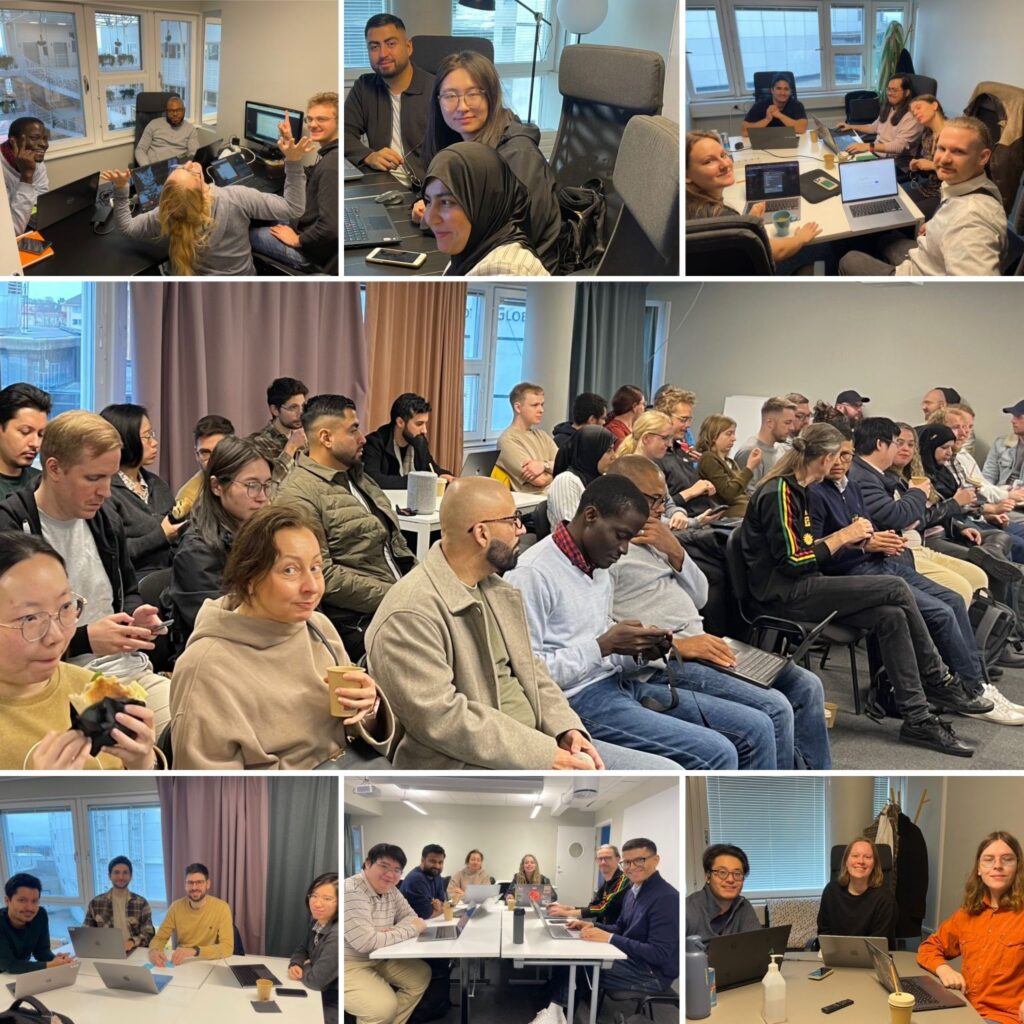
Hackathon Day: Let’s Do This
The day arrived, and I walked into the venue with my laptop, my slightly overambitious plan, and a healthy dose of imposter syndrome. But here’s the thing—the atmosphere was immediately welcoming. The organizing team at Cillers did an absolutely fantastic job. I mean it. From the moment I arrived, everything was taken care of. There was great food, endless snacks (crucial for coding marathons), and an energy in the room that was both exciting and supportive rather than competitive and cutthroat.
After a brief introduction where we all tried not to look too nervous, everyone scattered to start building. Most teams found rooms where they could sit together, whiteboard their ideas, and divide the work. Me? I spotted a large screen in a corner of the venue, plugged in my laptop, and claimed my solo coding fortress.
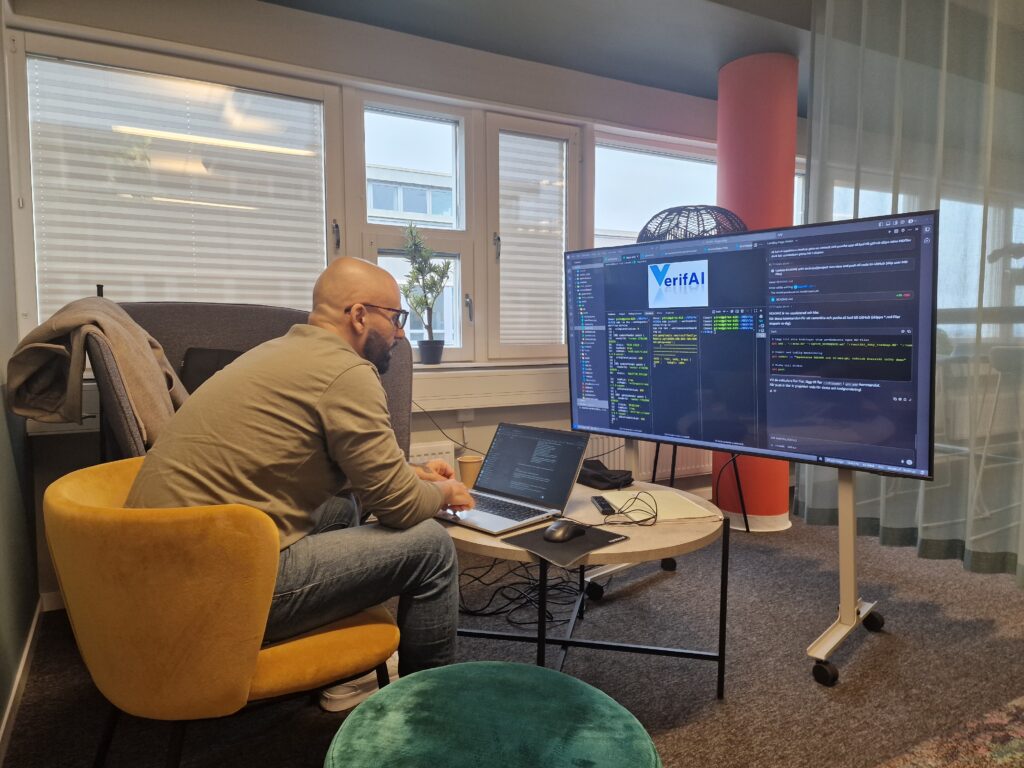
There was something oddly peaceful about it—just me, my screen, and the steady clicking of my keyboard, occasionally punctuated by trips to the snack table for fuel.
What I Built: VerifAI
So what was I actually building during all those focused hours? I created something called VerifAI—a platform that automates trust for business partnerships. Let me explain the problem first. Right now, when companies or public organizations want to work with a new supplier or business partner, they have to go through this incredibly slow, manual process to verify that the partner is trustworthy and follows all the rules. This onboarding process typically takes six weeks to six months, costs a fortune (the global cost is estimated at 2.2 billion dollars by the end of 2024), and is risky because manual, static checks often miss important changes—like new sanctions or tax issues.
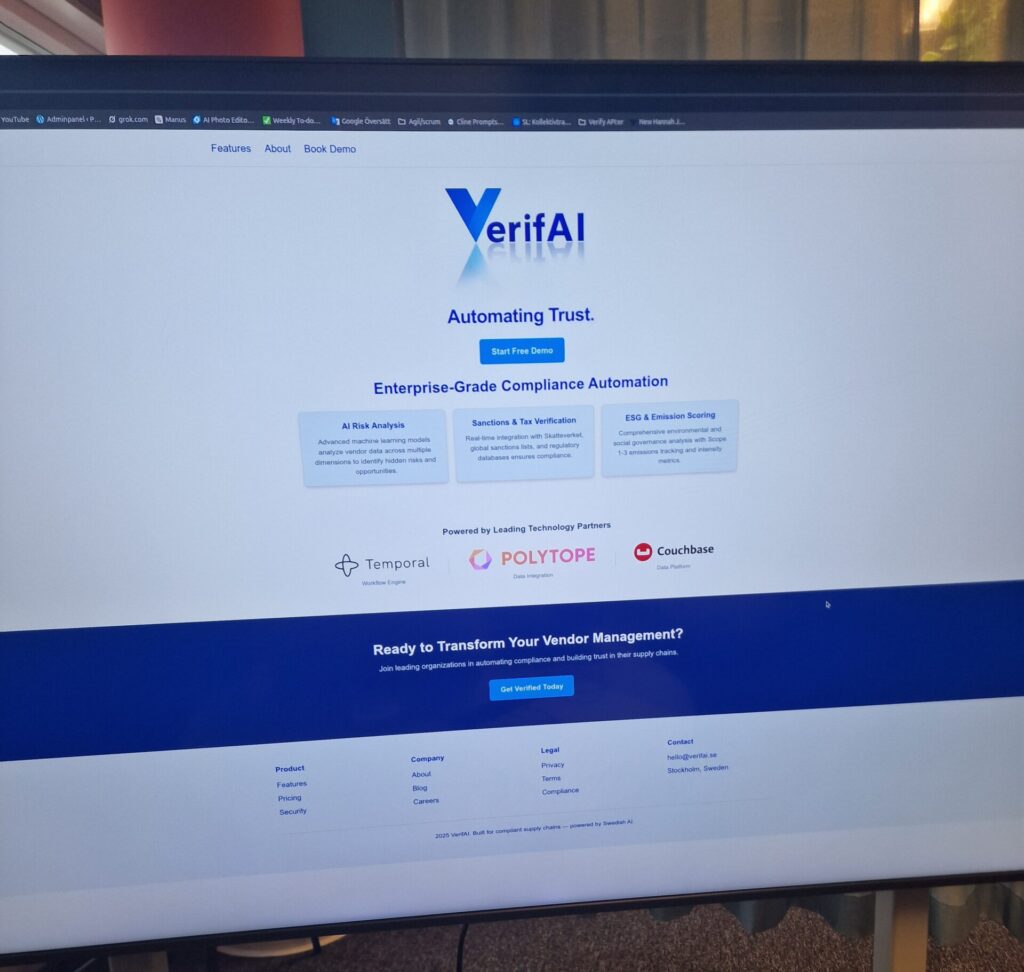
VerifAI transforms this slow, painful process into something intelligent and automated. Here’s how it works:
First, the platform automatically collects information from multiple real data sources through Polytope—sanctions lists from the EU, UN, and USA; public registers like tax offices and company registries; environmental compliance databases; and credit ratings. It’s pulling from genuine, verified sources, not test data.
Then, all this collected information gets fed into an AI system that automatically checks whether the supplier meets your organization’s compliance standards. VerifAI is comprehensive—it checks 84 different parameters, compared to other tools that might only check one or two. It performs deep analysis across sanctions compliance, financial health, and ESG factors (environmental performance, social responsibility, and governance).
Here’s where Temporal becomes crucial: it orchestrates this entire workflow. When a user submits supplier data through the React interface I built, the API starts a Temporal workflow. This workflow fetches all the external data points through Polytope, runs risk assessment rules, and calls the LLM to generate a risk explanation in Swedish.
But—and this is important—humans stay in the loop. When the AI detects any issues or the risk level is medium or high, the workflow pauses and requires a human to review the supplier before they can be approved or rejected. The results and AI-generated explanations are stored in Couchbase and displayed in the user interface.
One critical feature is automatic auditing. If a company gets approved today, the system automatically schedules a reassessment for later (say, in a year). This ensures that if the supplier changes—new sanctions appear, financial troubles emerge—the platform will catch it and warn you that they no longer meet your standards.
On the technical side, I built a frontend in React with Vite and Tailwind for the onboarding interface and demo, a Node.js/TypeScript REST API and Temporal worker on the backend, and integrated everything with Couchbase for data storage and OpenRouter for the AI-powered risk explanations. Temporal handled the orchestration to make the workflows robust and restartable, while Polytope managed all the external API integrations.
The Home Stretch
By the time 17:00 rolled around—the official submission deadline—I was done. I looked around and realized something funny: nobody else was finished. The organizers, in a merciful move, extended the deadline by an hour. Even then, it was a scramble for most teams.
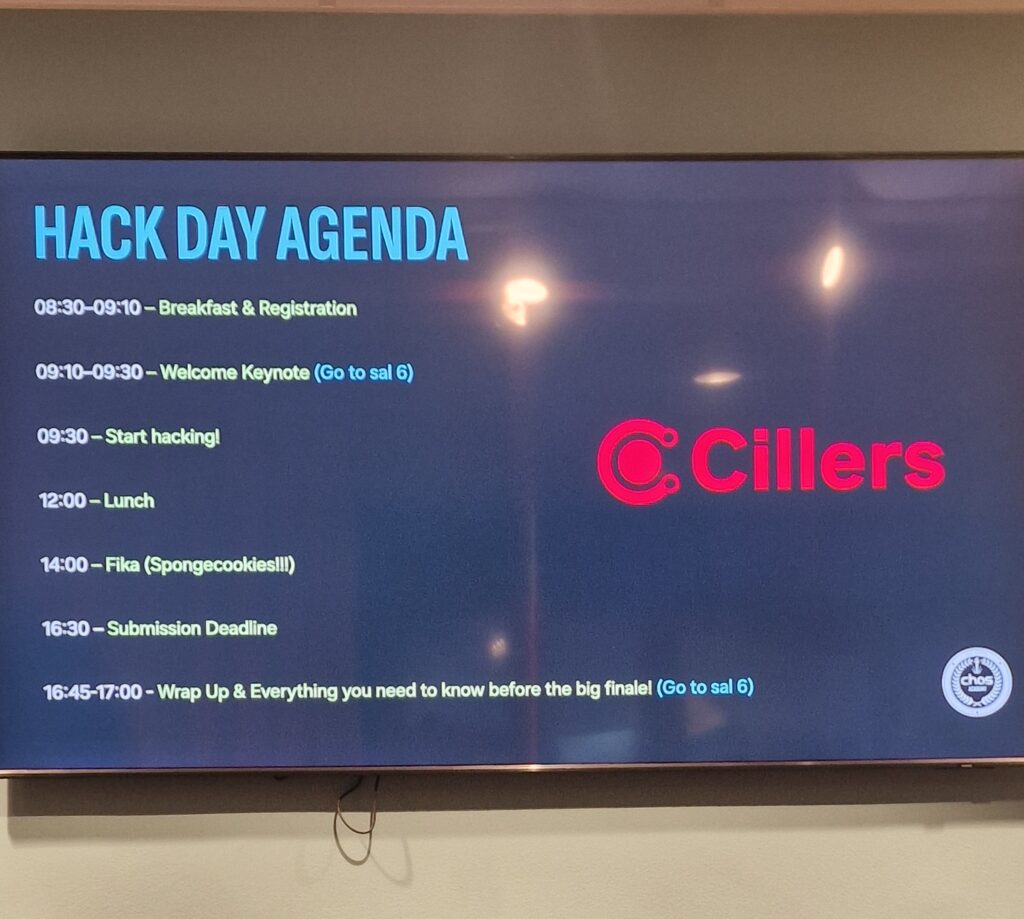
Each team had to submit a short demo video explaining their product. So there I was, recording myself walking through VerifAI, trying to sound coherent after hours of intense coding.
Here is my demo of my product:
The Waiting Game
And now? Well, at the time of writing this, I still don’t know how the hackathon results will turn out. With a jury of that caliber—CTOs, VPs, heads of innovation from some of the biggest companies in the Nordics—I’m honestly just honored to have participated. Did I win? Did my solo attempt at building an AI-powered compliance platform impress anyone? I have no idea.
But here’s what I do know: I went to my first hackathon alone, learned four new technologies in a few weeks, built something that solves a real problem, and had an absolute blast doing it.
To the organizers; Thank you for the great food, the technical support, and for creating such an inspiring environment for us to build and learn. The biggest win for me wasn’t just the project itself, but everything new I learned and all the incredible people I got to meet along the way. Feeling grateful, inspired, and already looking forward to the next one!
Whether I place or not, that feels like a win to me. Plus, the snacks were really good.

Start profiting from your network—sign up today!
Drive sales and watch your affiliate earnings soar!
Refer friends and colleagues—get paid for every signup!
Start profiting from your network—sign up today!
Monetize your traffic instantly—enroll in our affiliate network!
Promote our brand and watch your income grow—join today!
Turn your network into income—apply to our affiliate program!
https://shorturl.fm/cC4Tg
https://shorturl.fm/jLMWh
https://shorturl.fm/YJIHY
https://shorturl.fm/EDjUT
https://shorturl.fm/Liqod
https://shorturl.fm/ihEXQ
https://shorturl.fm/MpUR1
https://shorturl.fm/LOcwR